


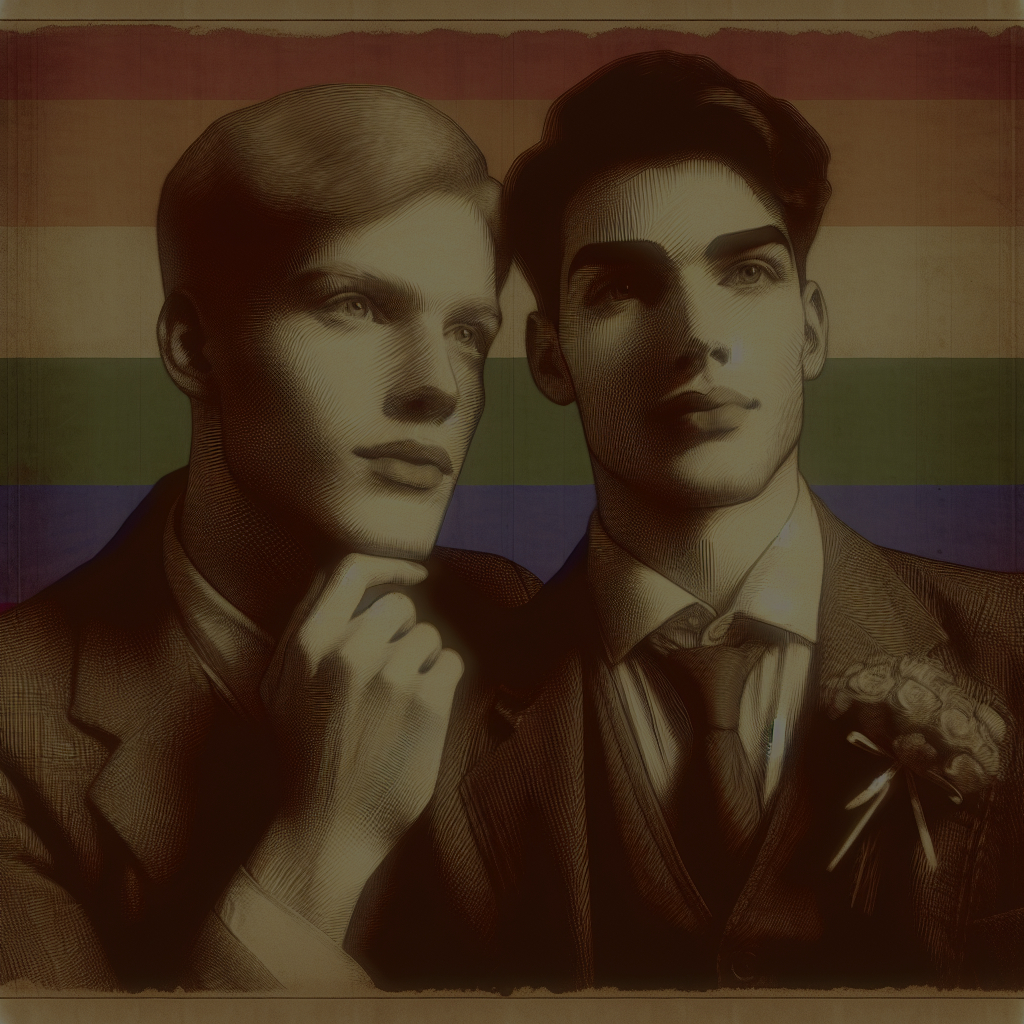
Andy Warhol and LGBTQ+ Representation
A multifaceted icon, Andy Warhol emerged as a compelling mirror of a rapidly changing America—where celebrity, consumerism, and identity converged into a provocative and revolutionary aesthetic. Raised in a working-class family in Pittsburgh, Warhol channeled his personal experiences and fascinations into stunning visual works: from his iconic Campbell’s soup cans and repeated portraits of Marilyn Monroe to his deep roots in queer and underground art circles. Through his innovative use of silkscreen printing and an unprecedented embrace of commercial imagery, Warhol blurred the lines between art and advertising, transforming mundane objects and famous faces into modern myths. More than mere celebration of pop culture, his work explores themes of superficiality, repetition, death, and self-image—particularly as they intersect with the emerging LGBTQ+ identity politics of 1960s New York.
Quick Summary
- Andy Warhol, a Pop Art pioneer, revolutionized the art world by incorporating everyday objects and celebrity figures into his creative vision.
- His use of silkscreen techniques and industrial aesthetics revealed a complex interplay between fascination with and criticism of consumer culture.
- Key works like the Campbell’s soup cans or portraits of Marilyn Monroe critically examine the modern obsession with fame, image, and mortality.
- His legacy, embodied by the Factory and key collaborations (notably with Jean-Michel Basquiat), continues to shape music, fashion, underground culture, and LGBTQ+ art in 2025.


Andy Warhol: Pop Art Pioneer and Master of Technique
Warhol’s breakout in the early 1960s marked a seismic shift in the art world. Suddenly, commercial products, mass-produced goods, and celebrities became worthy of canvas. With unflinching audacity, he reinvented the idea of the ready-made by turning everyday staples like Campbell’s soup cans and Coca-Cola bottles into fine art. Introducing silkscreen printing—a technique rarely seen in fine art at the time—Warhol industrialized imagery, highlighting the repetitive, dehumanizing rhythm of mass consumption.
One of Warhol’s most striking talents was his ability to reframe the ordinary through a visually arresting lens. His commitment to repetition and banality provoked deep questions about the value systems embedded in modern culture. What is art, after all, if not an echo of the world’s most pervasive symbols?
| Key Element | Warhol’s Innovation |
|---|---|
| Silkscreen Printing | Repurposed industrial technique for artistic mass production |
| Everyday Objects | Transformed supermarket items into high art |
| Popular Culture | Used media imagery, movie stars, and ads as central motifs |
| Serial Repetition | Interrogation of originality in the machine age |
Redefining Everyday Imagery: From Pop Culture to Fine Art
Warhol’s work disrupted traditional norms by embedding pop culture—movies, ads, TV, gossip columns—into the once-exclusive domain of fine art galleries. A landmark moment came in 1962, when he unveiled his “32 Campbell’s Soup Cans” series at Ferus Gallery in Los Angeles. Each painting featured a different flavor, arranged like supermarket shelves: identical yet subtly unique. In re-creating the monotony of retail displays, Warhol prompted viewers to reckon with consumerism’s aesthetic—and ethical—implications.
- Introduced a new visual language grounded in mass appeal and public familiarity.
- Challenged the boundary between commercial branding and artistic expression.
- Opened contemporary art to LGBTQ+ themes, subtly embedded in a conservative American context.
This once-controversial gesture now stands as a cornerstone of Warhol’s paradox: the elevation of the ordinary, filtered through critique and reverence alike.
In-Depth Analysis of Warhol’s Iconic Works and Cultural Resonance
Certain works by Andy Warhol have become ingrained in collective consciousness. The “Marilyn Diptych” (1962), composed of 50 images—some in neon color, others in stark black and white—reflects on celebrity, decay, and the fleeting nature of stardom. His depictions of Liz Taylor, Elvis Presley, and Jackie Kennedy extend this meditation, turning contemporary idols into quasi-religious icons shaped by media saturation.
| Work | Subject | Technique | Year | Cultural Impact |
|---|---|---|---|---|
| Campbell’s Soup Cans | Commercial product | Silkscreen on canvas | 1962 | Challenged elitism in art culture |
| Marilyn Diptych | Marilyn Monroe | Silkscreen, color/monochrome | 1962 | Reflected on fame, mortality |
| Flowers | Stylized blooms | Silkscreen | 1964 | Juxtaposed nature with artificiality |
| Electric Chair | Capital punishment | Silkscreen, cold palette | 1967 | Critique of state-sanctioned violence |
| Mao Series | Chinese leader | Silkscreen on canvas | 1972 | Satire of political iconography |
From Silkscreen to Celebrity: Unearthing Warhol’s Cultural Commentary
Warhol’s use of silkscreen printing did more than mechanize image production—it challenged conventional ideas of originality and uniqueness. His repetitive portrayals of Marilyn Monroe, Liz Taylor, and Mao Zedong transformed them into media commodities, echoing Guy Debord’s theory of the spectacle, where society privileges image over experience.
- Recurring themes of fame and death expose Warhol’s concern with the fragility of identity in the media age.
- The “Electric Chair” series offers a political stance, confronting America’s grim embrace of death as justice.
- The “Mao” portraits critique both capitalist kitsch and totalitarian cults of personality.
Warhol’s brilliance lies in this tension—between attraction and repulsion, individuality and anonymity—encapsulating the cold allure of modern fame-driven culture.
The Enduring Legacy: Collaborations, Music, and Final Years
Warhol’s cultural footprint extends far beyond the canvases of art galleries. In the 1960s, his iconic studio, The Factory, became a refuge for creatives, misfits, and budding LGBTQ+ voices. It was more than a workspace—it was a crucible of artistic rebellion, queer culture, and avant-garde experimentation. As producer and creative force behind The Velvet Underground, Warhol seamlessly merged visual art with music. The banana-covered album for “The Velvet Underground & Nico” remains among the most recognizable covers in rock history, while performances at the Factory foreshadowed today’s multimedia experiences and queer drag artistry.
- Unified visual art, music, and performance—laying the groundwork for modern pop culture.
- Created a “safe space” for queer and marginalized artists pushing artistic boundaries.
- Influenced future design, fashion

 English
  Español
Leave a Reply