


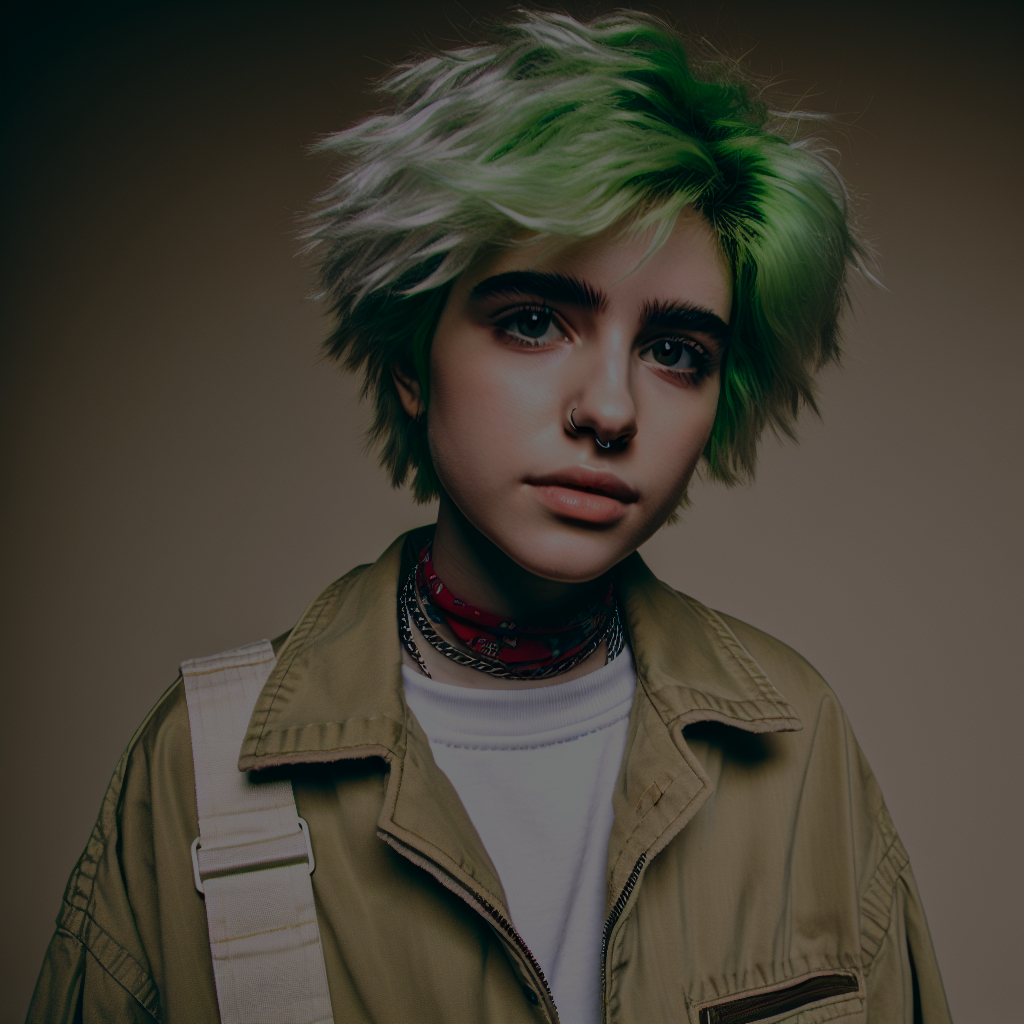
A Fluid Aesthetic That Defies Convention
Since her explosive debut on the global music scene with Ocean Eyes, Billie Eilish has proven to be more than just an exceptionally talented artist — she’s a visual enigma. At only 14, she embraced a nonconformist look: oversized clothing, ever-changing hair colors, smoky dark eyes, a near-mute demeanor, and a stripped-down stage presence. Eilish disrupted the expectations usually placed on young female performers.
This refusal to conform to traditional beauty standards has become her signature. She has openly spoken about choosing oversized clothes to avoid being sexualized — a choice that resonates deeply with LGBTQ+ youth, who are often pressured to adhere to rigid gender roles and expressions of desire. Her style isn’t just fashion — it’s resistance: a body language that rejects the binary and embraces multiplicity. She moves freely between masculine, feminine, goth, and futuristic aesthetics — never static, always fluid.
Her music videos amplify this narrative. In visuals like bury a friend and All the Good Girls Go to Hell, Billie blurs the line between beauty and darkness, creating spaces where monstrosity seduces and femininity is decentralized. These compelling, eerie visuals speak directly to a queer audience seeking to reclaim expression beyond cis-heteronormative frameworks.
Owning Her Sexuality, Without Labels
Billie Eilish’s relationship with her sexuality is honest, deliberate, and refreshingly unlabelled. In a 2023 interview with Variety, she revealed that she’s always been attracted to women — a simple truth delivered without drama or categorization:
“I’ve always been attracted to women, but never felt the need to talk about it.”
Her openness — without adopting specific labels like lesbian, bisexual, or queer — mirrors a broader shift among today’s LGBTQIA+ youth. For many, labels can both affirm and confine. Eilish embodies a modern form of queerness — not defined by a public coming out, but rather by authentic fragments shared on her own terms.
In a culture that demands complete transparency from celebrities, her decision to protect parts of her identity feels quietly radical. She doesn’t deny; she chooses when and how to share. That very autonomy — the refusal to perform queerness for applause — is itself a deeply queer act. It says: I exist as I am, without needing to tick the boxes prescribed by society.
Why LGBTQ+ Youth Connect With Billie Eilish
Billie doesn’t sing about fairytales or heteronormative love stories. Her lyrics are soaked in emotional chaos: confusion, desire, isolation, fear of the future, and a longing for another kind of reality. These very themes are what make her so relatable to queer youth. In an era marked by eco-anxiety, identity crises, and the struggle for social justice, Billie reflects the mental and emotional climate of an entire generation.
Musically, her whispered vocals combined with experimental pop and minimalist electronica create an atmosphere of fragile intimacy. Her vulnerability is her power. In a world obsessed with strength and perfection, Billie offers a different blueprint: she makes it okay to be soft, anxious, weird, and undefined. That, too, is radically queer.
Across social media, LGBTQ+ fans often credit Billie’s music and presence with helping them understand their identities or simply feel less alone. She may not intend to be, but she has become a powerful emotional and symbolic touchstone for many.
Queer Icon or Ally? A Role That Keeps Evolving
Can Billie Eilish be considered a queer icon if she hasn’t clearly claimed a LGBTQ+ label? For some, being an icon means openly advocating for the community and disclosing one’s own experience. For others, the cultural impact matters more than explicit declarations.
Billie resides in this gray space. She hasn’t made an “official” coming out, but she offers a realm of representation for millions of queer youth. Much like Harry Styles, Phoebe Bridgers, or Bad Bunny, she helps dismantle the barriers of gender and sexual orientation simply by existing outside of clear categories. She makes space for ambiguity — and that space is queer.
Through open support of the LGBTQ+ community, inclusive initiatives, and a refusal to judge or stereotype minority identities, she stands out as a valuable ally. For many fans, however, her ethos, visual art, and honest storytelling place her firmly among the rank of generation-defining queer icons.

A Social Activist with Real Impact
Billie Eilish doesn’t just challenge gender norms — she fights for causes that LGBTQ+ audiences often care deeply about. Her activism spans climate justice, mental health awareness, and gender equality. This political consciousness elevates her image and resonates with a generation of queer individuals who see identity as interwoven with broader cultural battles.
At the WSJ Magazine Innovator Awards, she used her acceptance speech for Musical Innovator of the Year to call out the obscene concentration of wealth — directly in front of Mark Zuckerberg, no less:
“If you have money, it would be really nice to use it for good… maybe give it to those who need it.”
Then, with her signature sharp wit, she added:
“No hate, but yeah — give your money away, shorties.”
She backed her words with action, donating $11.5 million from her Hit Me Hard and Soft tour to climate and social justice initiatives. This direct engagement amplifies her credibility among LGBTQ+ audiences who often crave ethical authenticity from their idols.
An Artist in Sync With Queer Youth Worldwide
Today’s LGBTQ+ youth often stand at the intersection of various social struggles: gender identity, environmental urgency, mental health, and systemic injustice. They long for public figures who genuinely embody these intersecting concerns — without reducing them to corporate slogans. Billie Eilish is one of the rare mainstream artists who meets that need.
Even her artistic approach is inherently queer in structure — it defies genre, embraces contradictions, and ignores the expected rules of pop music. In doing so, she models a way of being that is intentionally offbeat — unapologetically non-normative, yet deeply resonant.
For many fans, her personal labels matter less than the permission she offers to exist authentically, in all one’s complex humanity.
No Marketing-Driven Queerness
In a time when celebrities and brands often exploit LGBTQ+ visibility for performative gain, Billie Eilish refuses to commodify queerness. She doesn’t release Pride-themed merch just for June. She doesn’t seek viral headlines with rainbow-themed campaigns. Her relationship with the LGBTQ+ community feels organic, unglamorous, and unscripted.
And it’s exactly this authenticity that resonates. Today’s queer youth are tired of manufactured allies who try too hard. They want rawness — even if it’s messy or incomplete. Billie isn’t trying to decode every identity — she listens, she stays curious, and she acts intuitively. That’s often all it takes to be genuinely loved.
Conclusion: A Quietly Radical Queer Icon
Is Billie Eilish a queer icon — even by accident? Arguably, yes. Not because she proclaims a label, but because she embodies a worldview and creative expression that deeply aligns with the LGBTQIA+ experience.
Through her fluid aesthetics, unlabelled self-expression, and heartfelt activism, she has become more than an artist — she’s a reflection of an evolving cultural identity. No flag-waving needed: her mere presence on the pop stage is a quiet rebellion, full of softness, defiance, and sincerity.
In Billie Eilish’s world, queerness isn’t just who you love — it’s how you see, feel, and exist. Through this lens, she has etched herself into the narrative of contemporary queer youth and their music-driven search for identity, validation, and freedom.

 English
  Español
Leave a Reply