


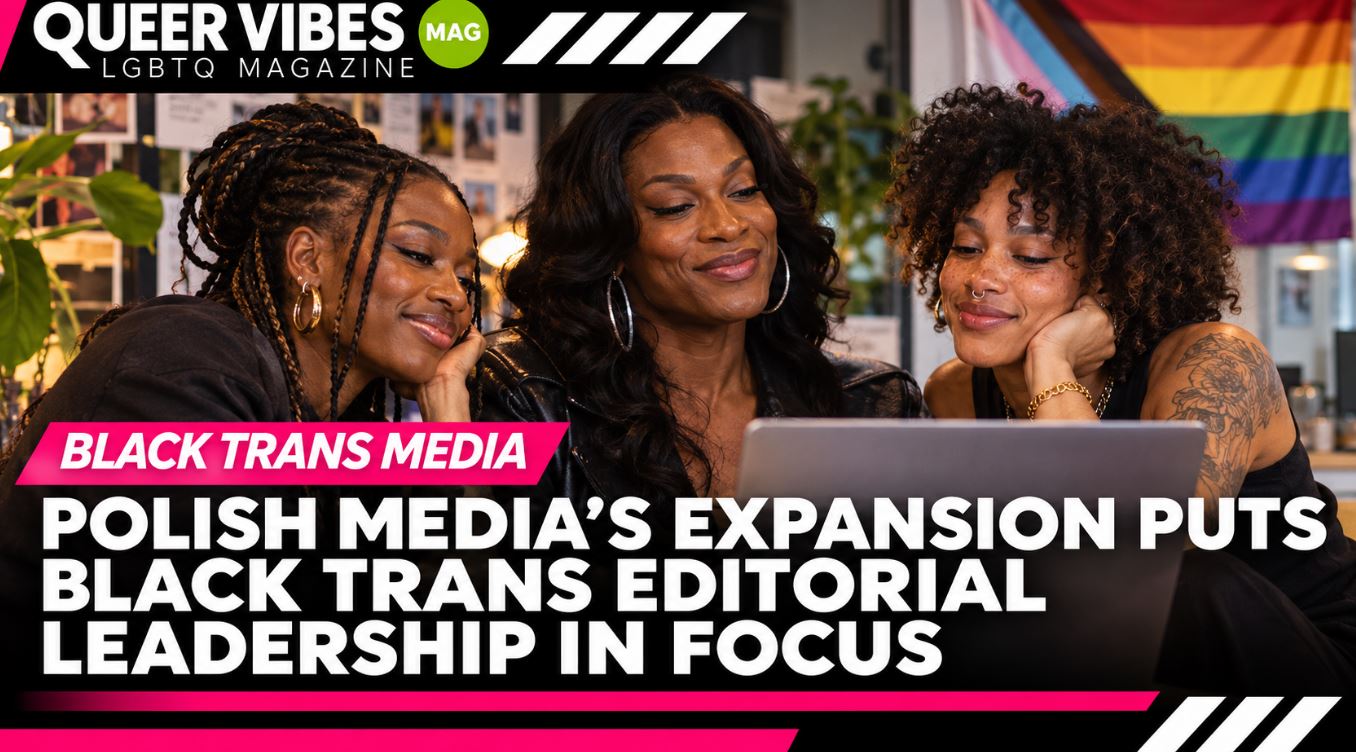
Who makes editorial decisions matters as much as who appears in a story. POLISH Media’s latest expansion brings that question into focus: the independent Black trans-led publication is adding technology and programme expertise while seeking community funding for its newsroom.
In a November 16 announcement, POLISH named Angelica Ross and Tiq Milan as strategic partners. Ross’s remit covers platforms and technology; Milan’s covers programmes and media strategy. The company also announced a newsroom fund scheduled to launch on December 1. These are announced plans; their long-term results remain to be demonstrated.
Editorial authority beyond representation
Led by Marie-Adélina de la Ferrière, POLISH describes its mission as centring Black and brown trans and queer people as the people producing journalism, rather than only its subjects. Its public editorial offering includes interviews, commentary and cultural features.
That model raises a more substantial question than a simple count of visible LGBTQ+ contributors: who commissions a story, chooses its framing and decides which experiences deserve continued attention? A newsroom can cover trans people frequently while still giving them little control over those decisions.
The practical work behind an independent newsroom
POLISH’s announcement connects its editorial ambitions to production skills. A proposed partnership with TransTech would involve LGBTQ+ creators in video editing, graphics and sales, alongside opportunities to publish. Milan is expected to develop workshops and partnerships.
Those functions are part of the infrastructure that makes journalism possible. A publication needs distribution, technical support and reliable ways to pay for its work as well as writers. The relevant test is whether new programmes lead to sustained opportunities and reporting that readers can evaluate.
What community support can—and cannot—show
Community funding can help a publication maintain direct relationships with its readers. It does not, by itself, establish financial sustainability or editorial independence. Those require evidence over time: clear funding disclosures, corrections practices and a visible distinction between reporting, opinion and promotional work.
POLISH’s stated mission offers a useful basis for assessing the project. Its future output, commissioning choices and disclosed partnerships will show how that mission translates into practice. Its expansion is therefore an announcement worth following, rather than proof that the economic challenges facing independent queer journalism have been solved.
Sources: POLISH’s November 16 announcement and its public editorial mission. Organisational plans are attributed to POLISH; this article does not report an interview with its leadership.



 English
 Español
Leave a Reply