


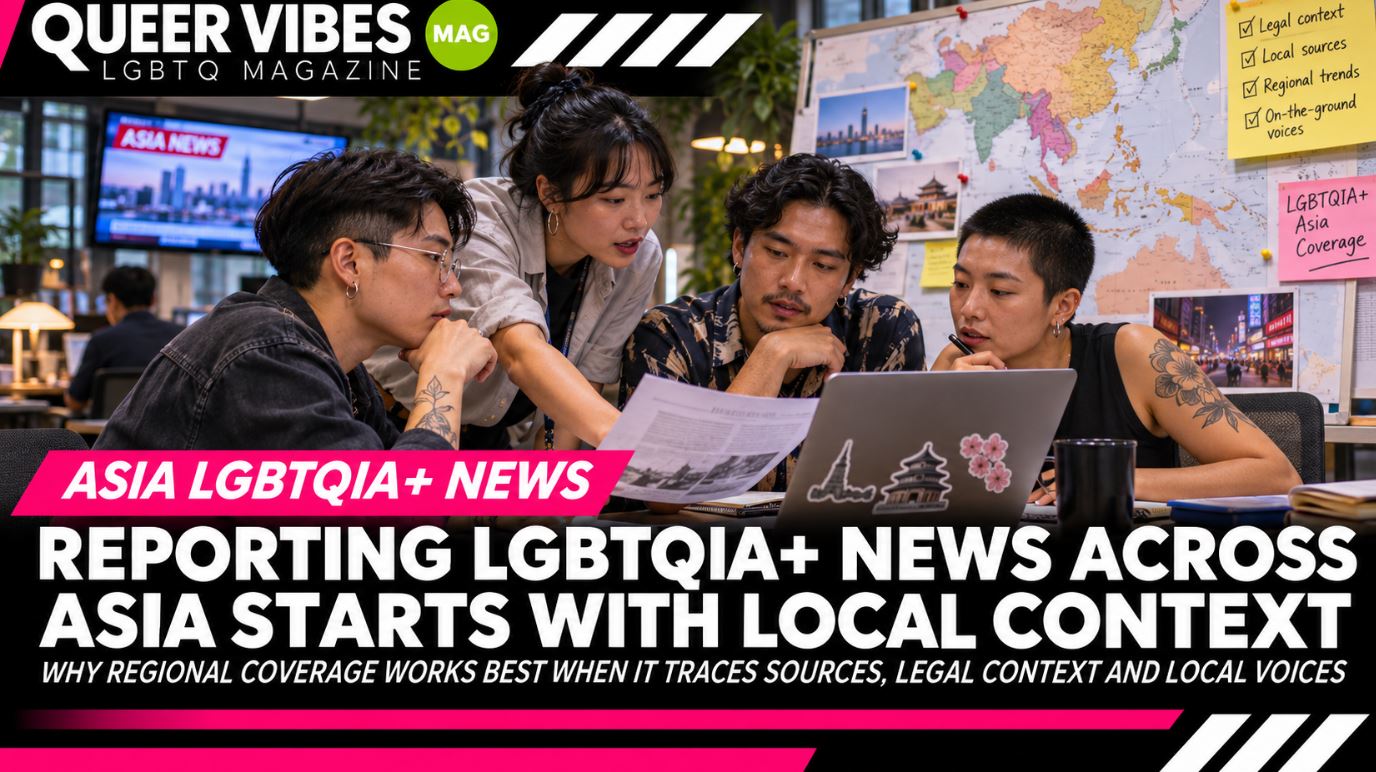
A regional news roundup can help readers discover stories that rarely reach international headlines. It can also obscure where the information originated. ILGA Asia’s November 17, 2026 collection provides a useful starting point for a wider question: how can English-language coverage connect developments across Asia without treating the region as a single political or cultural landscape?
The organisation explicitly describes its collection as material gathered from news agencies and media platforms. That makes it a discovery resource, rather than independent confirmation of every story it includes.
Trace a story back to its evidence
The first step is to identify the original reporting or document. A court ruling, proposed law, campaign statement and personal testimony have different evidentiary roles. Several websites carrying the same report do not necessarily provide several independent confirmations.
Attribution should follow the work. A journalist who obtained an interview deserves credit for that testimony; an organisation’s statement establishes what it says, rather than automatically proving every claim it makes. Where an original document cannot be checked, that limitation should remain visible.
Keep legal stages and national contexts separate
ILGA Asia’s October 8 publication on censorship describes different mechanisms restricting expression, including broadcasting proposals, content blocking and criminal penalties. Its regional framework is useful, but each example needs its own jurisdiction, date and procedural status.
A proposed restriction must not become an enacted law in a translated headline. Nor does a regional pattern establish that all countries apply the same rules. Explaining those differences is essential to understanding what a development means for people living there.
Language and privacy are reporting decisions
Terms used by officials, campaigners and communities may carry different meanings. English-language reporting should identify how people describe themselves, explain necessary local terminology and avoid assuming that a familiar Western label is always an exact equivalent.
Privacy also requires an active decision. An identifying photograph or name being publicly accessible does not make republishing it necessary. Reporters should weigh its relevance against the risk of unwanted exposure, particularly where public identification can affect personal safety.
A regional lens needs local voices
Regional organisations can connect otherwise isolated developments. Local reporters, community organisations and primary records supply the detail that prevents that connection from becoming a generalisation. Neither perspective replaces the other.
For readers, useful coverage makes the path to the evidence visible: where the event happened, when it happened, who documented it, what has been verified and what remains uncertain. That method leaves room for common patterns while preserving the distinctions that matter.
Sources: ILGA Asia’s November 17 news collection and its October 8 publication on censorship. The reporting principles discussed here are this article’s editorial analysis; they are not presented as findings of an ILGA Asia study.





 English
 Español
Leave a Reply