


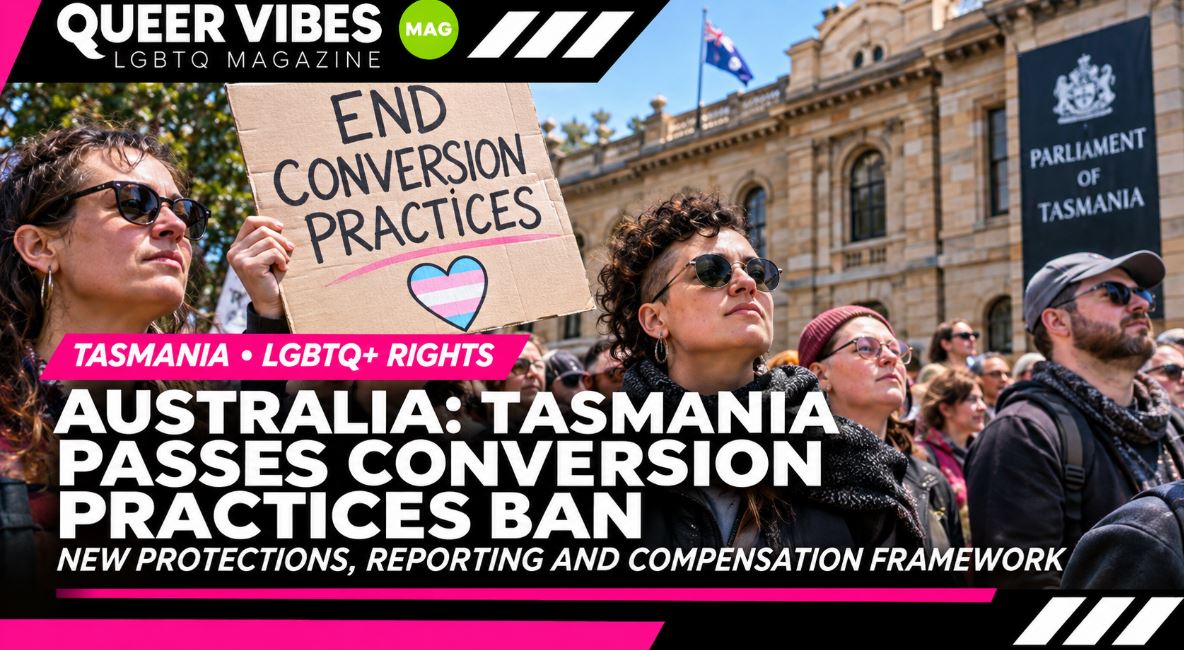
Tasmania’s parliament passed legislation on November 25, 2026, prohibiting practices intended to alter or suppress a person’s sexual orientation or gender identity. The reform establishes a framework for prevention, reporting, investigations and compensation, alongside criminal penalties for certain harmful conduct.
The vote concludes a decade-long campaign involving conversion practice survivors and LGBTQIA+ organizations in the Australian island state. However, the legislation has yet to complete all the steps required to come into force.
A ban that extends beyond criminal prosecution
Introduced by Tasmanian Greens leader Rosalie Woodruff, the Conversion Practices Prohibition Bill 2026 received final parliamentary approval after passing the House of Assembly on October 29 and the Legislative Council on November 25.
Rather than relying exclusively on criminal prosecution, the legislation establishes a prevention and response system overseen by a Conversion Practices Commissioner.
Once operational, the scheme will allow people to report suspected conversion practices. The commissioner will have powers to investigate systemic misconduct, arrange educational interventions and issue compliance notices.
Cases reaching the Tasmanian Civil and Administrative Tribunal could also result in financial compensation for affected individuals.
The legislation creates separate criminal offenses for conversion practices that cause injury, subject to specific legal conditions, and for taking someone outside Tasmania to undergo such practices. Advertising conversion practices will also constitute an offense.
What will Tasmania’s conversion practices ban cover?
The legislation applies to conduct targeting an individual’s sexual orientation or gender identity with the intention of changing or suppressing it. A person’s apparent consent does not automatically exclude the conduct from the prohibition.
The bill is not restricted to practices involving minors or those taking place in medical settings.
It also distinguishes conversion practices from legitimate psychological support, identity exploration and healthcare provided in accordance with professional and ethical standards.
Public debate, the expression of religious beliefs and certain forms of parental guidance do not, by themselves, constitute prohibited practices. The distinction depends on the nature and purpose of the conduct.
These provisions address concerns raised during the parliamentary debate about religious expression, parental responsibilities and clinical independence.
Recognition of asexual, aromantic and agender people
A less widely discussed part of the legislation concerns Tasmania’s existing anti-discrimination framework.
The bill revises the statutory definition of sexual orientation to include the absence of attraction, extending explicit recognition to asexual and aromantic people. It also adds agender identities to the definition of gender identity.
Amendments adopted by the Legislative Council removed references to intimate or sexual relationships from the proposed definition of sexual orientation, retaining its focus on attraction or the absence of attraction.
This distinction is significant because a person’s orientation cannot necessarily be determined by their relationship history or sexual behavior.
The changes therefore extend beyond the prohibition of conversion practices, updating terminology within Tasmania’s broader anti-discrimination legislation.
Survivors welcome the parliamentary vote
The reform follows years of testimony, community consultation and advocacy.
In 2022, the Tasmania Law Reform Institute published recommendations addressing the harm associated with conversion practices and the inadequacy of existing legal protections.
Survivor Renie Elliott, who experienced conversion practices over five years, expressed relief following Wednesday’s parliamentary vote in an interview with ABC News.
Equality Tasmania spokesperson Rodney Croome credited survivors for bringing about the legislative change and described the protections as the strongest of their kind in Australia.
Australia’s uneven approach to conversion practices
Tasmania’s parliamentary decision adds another jurisdiction to Australia’s developing network of protections against conversion practices.
Victoria, New South Wales, South Australia and the Australian Capital Territory have already introduced bans. Queensland has a more limited prohibition covering healthcare settings.
Western Australia and the Northern Territory remain without comparable bans.
These differences mean that reporting procedures, available remedies and the scope of legal protection continue to vary depending on where a person lives.
The relationship between sexual orientation, gender identity and personal behavior is also central to understanding these laws, as explored in our guide to sexual orientation, identity and common misconceptions.
When will Tasmania’s conversion practices ban take effect?
As of November 27, the official parliamentary record confirms that both chambers have approved the legislation but does not yet record royal assent.
Under the bill’s commencement provisions, most sections can be brought into force by proclamation and must commence within 12 months of royal assent. Certain separate provisions have a maximum implementation period of 24 months.
The immediate next steps are therefore formal assent and implementation, including the establishment of the reporting and prevention framework through which the new protections will operate.



 English
 Español
Leave a Reply