


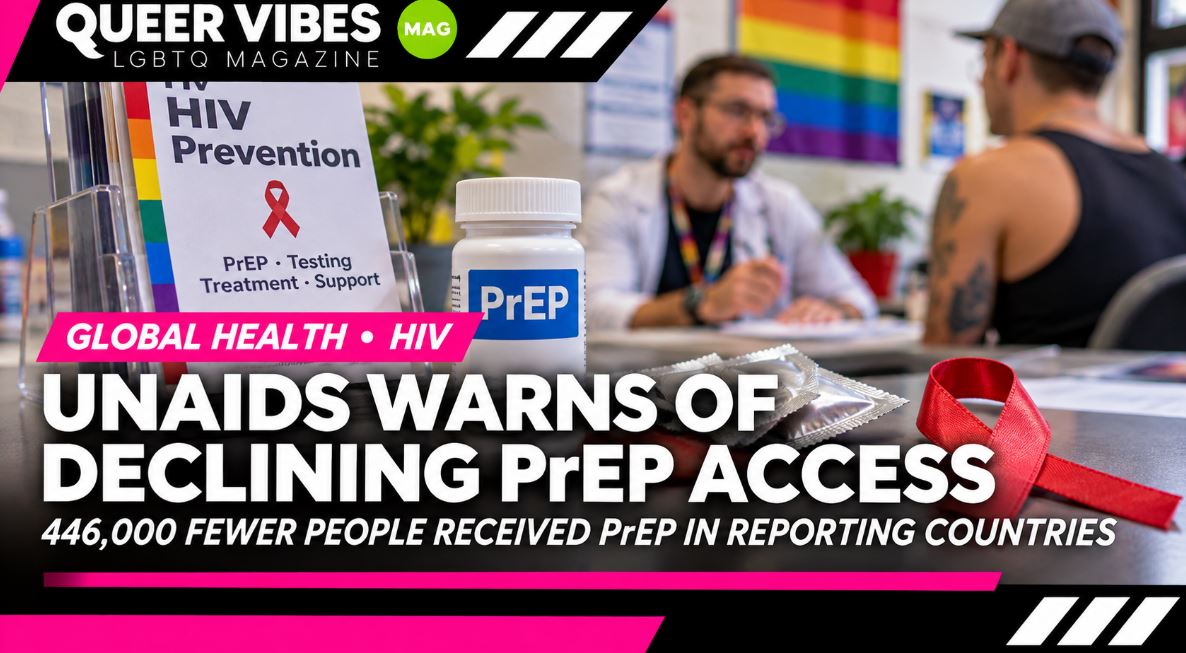
New HIV prevention medicines are becoming available at a time when hundreds of thousands of people are losing access to existing options. The latest UNAIDS Global AIDS Update, published on November 24, 2026, highlights a widening gap between scientific progress and the ability of health systems to deliver preventive care.
Across 83 countries with comparable data, excluding South Africa, approximately 446,000 fewer people received HIV pre-exposure prophylaxis (PrEP) in 2025 than in 2024, representing a 15% decline.
Released ahead of World AIDS Day on December 1, the findings raise concerns about the future of HIV prevention, particularly among communities already experiencing barriers to healthcare.
LGBTQ+ communities face declining access to HIV prevention
The impact of disrupted prevention programs varies considerably across populations.
Data examined in the UNAIDS Global AIDS Update 2026, covering 39 reporting countries, show declines in PrEP use between 2024 and 2025:
- 59% among sex workers.
- 58% among people who inject drugs.
- 23% among transgender people.
- 17% among gay men and other men who have sex with men.
These figures describe changes within the available reporting data rather than worldwide prevalence estimates for each population.
For LGBTQ+ communities, access to prevention can depend on more than the availability of medication. Confidential consultations, affordable testing, knowledgeable healthcare professionals and protection from discrimination can determine whether individuals feel able to seek care.
When specialized services disappear, general healthcare facilities may not always provide an accessible alternative.
Funding cuts threaten community-based prevention
International HIV financing decreased by 18% in 2025, according to UNAIDS figures reported by Euronews. An increase in domestic funding was insufficient to offset the losses.
UNAIDS estimates that the annual resources required to meet international HIV objectives exceed available funding by $4.3 billion.
The consequences extend beyond medication procurement. Community organizations help connect people with testing, sexual health information and prevention services, particularly where stigma or discriminatory treatment discourages engagement with conventional healthcare systems.
The closure of these services can interrupt established relationships between healthcare providers and the populations they support.
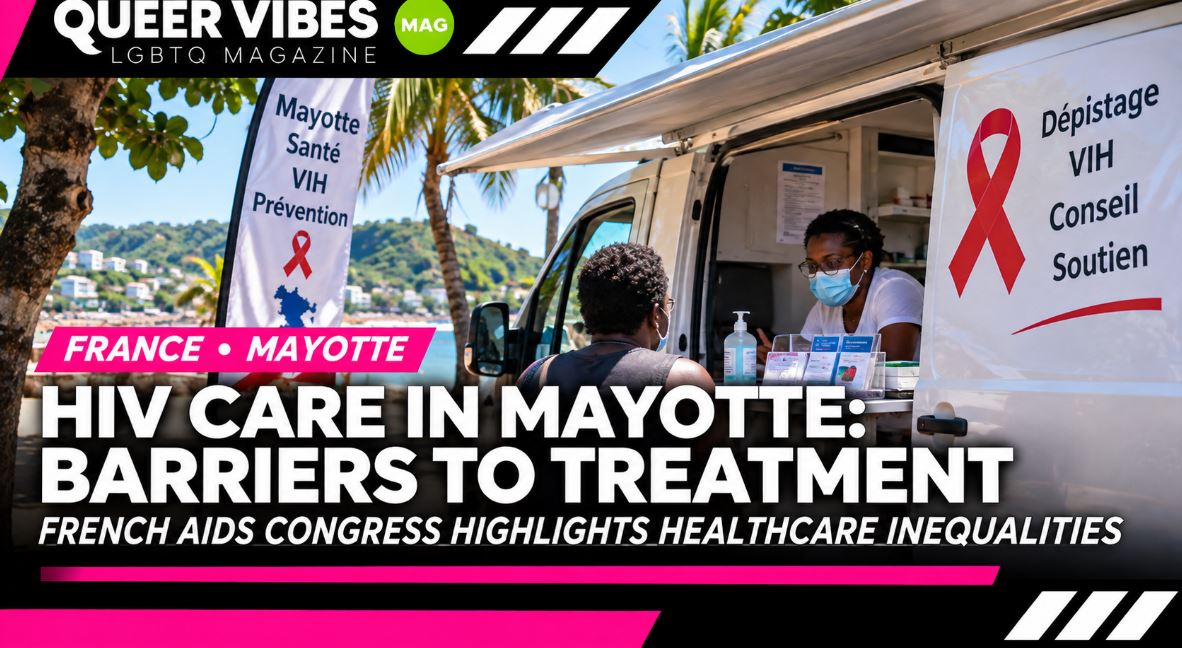
Similar barriers to healthcare access have been highlighted in the French overseas department of Mayotte, where community organizations play a crucial role in helping patients overcome obstacles to HIV care and treatment.
Medication shortages represent another potential barrier, as Queer Vibes Mag previously reported in its coverage of PrEP supply disruptions in Switzerland.
New injectable PrEP reaches Zambia
Despite the wider funding crisis, November 2026 has brought an important development in HIV prevention.
On November 25, the Global Fund announced that the first shipments of generic lenacapavir had arrived in Zambia.
Further deliveries are expected in Uganda, with Zimbabwe scheduled to receive supplies in early 2027.
Lenacapavir is a long-acting injectable form of PrEP administered every six months. In July 2025, the World Health Organization recommended offering it as an additional HIV prevention option.
Unlike daily oral medication, long-acting PrEP can reduce the burden of remembering to take tablets. It may also offer a more discreet option for people who encounter stigma associated with HIV prevention medication.
However, expanding access still requires reliable procurement, trained healthcare workers, HIV testing and appropriate medical follow-up.
The arrival of generic lenacapavir illustrates how pharmaceutical innovation and the infrastructure required to deliver it must advance together.
What the UNAIDS figures do — and do not — tell us
The decline in PrEP use does not mean that HIV infections have increased by the same number.
The figure of 446,000 represents a reduction in the number of people receiving preventive medication across the countries included in the comparison. It is not a count of new HIV diagnoses.
UNAIDS estimates that approximately 1.2 million people acquired HIV worldwide in 2025. While this represents substantial progress compared with earlier decades, the decline remains insufficient to achieve international objectives for 2030.
National experiences also differ. Brazil, Uganda and Tanzania were among the countries recording increases in PrEP use despite the broader downturn.
These differences underline the importance of examining local healthcare policies, funding arrangements and service availability alongside global statistics.
Could HIV infections increase again in 2027?
Speaking to Reuters on November 24, UNAIDS Executive Director Winnie Byanyima warned that new HIV infections could begin increasing again in 2027.
Her warning concerns a possible future reversal of progress, rather than an increase already established by the latest epidemiological data.
As World AIDS Day approaches, the report places renewed attention on the sustainability of prevention programs and the role of community-led healthcare.
For LGBTQ+ communities and other populations disproportionately affected by barriers to care, the challenge is not simply whether effective HIV prevention exists, but whether it remains accessible, affordable and available without discrimination.



 English
 Español
Leave a Reply