


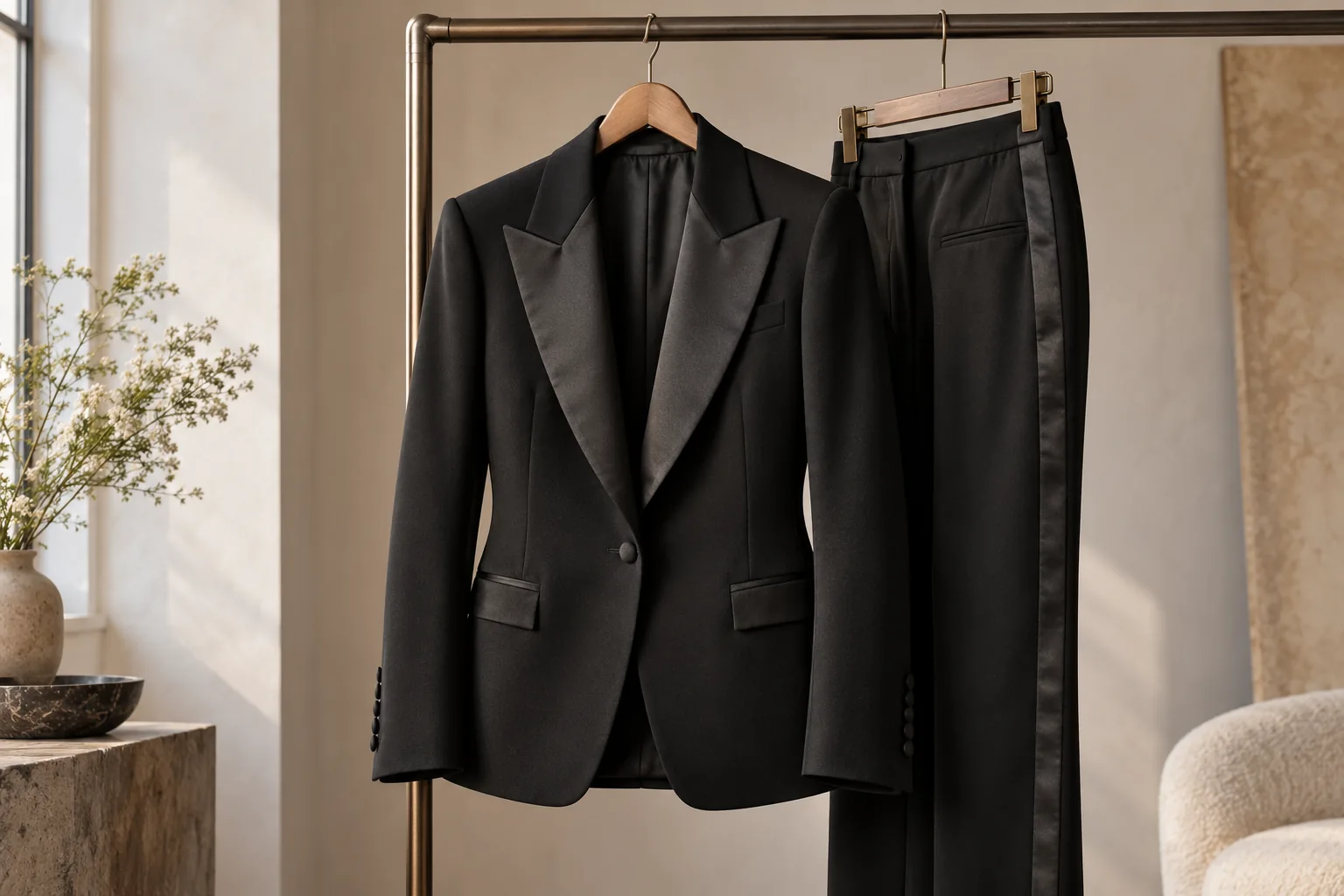
Yves Saint Laurent helped change the relationship between women’s clothing and the masculine wardrobe. His tuxedos, tailored suits and safari jackets offered alternatives to the familiar codes of evening wear and daywear. Looking at his work through a queer lens also means recognising the personal and professional partnership with Pierre Bergé that helped build his house.
From Dior to His Own House
Saint Laurent became head designer at Dior in 1957, aged 21, following Christian Dior’s death. His first collection for the house, presented in January 1958, established the Trapeze silhouette. These dates matter: Dior recognised and employed the young designer, but Saint Laurent’s appointment to lead the house followed its founder’s death.
Saint Laurent and Bergé went on to create a new couture house. The Musée Yves Saint Laurent Paris dates its opening to 4 December 1961. Bergé organised financing and the practical foundations of the business; Saint Laurent supplied its creative direction. Their partnership belongs at the centre of the story, alongside the clothes themselves.
Le Smoking: An Alternative to the Evening Dress

In 1966, Saint Laurent introduced his first tuxedo for women. Known as Le Smoking, it translated an established masculine formal garment into a different wardrobe. The museum’s account describes the tuxedo as a lasting symbol of women’s liberation, revisited by the designer through 2002.
Its importance lies in the choice it offered: a woman could approach formal dress through tailoring rather than through the expectation of a gown. That does not mean every wearer gave the garment the same political meaning. It does explain why it remains useful in discussions of gender and clothing.
The Safari Jacket and Everyday Clothing
Saint Laurent showed safari jackets in 1967. A special design photographed for Vogue Paris in 1968 helped make the look famous, and a ready-to-wear version followed in 1969. The museum places this garment within his broader use of masculine dress codes to rethink women’s fashion.
Art, Transparency and a Queer Reading of Fashion
The Metropolitan Museum of Art discusses Saint Laurent’s dialogue with art, street style and sheer fabrics. These strands help explain a body of work that crossed boundaries between established categories of taste and dress.
A queer reading can ask who gets to wear a suit, how clothing signals gender, and what room a wardrobe leaves for self-expression. This is an interpretation of the work, rather than proof that every childhood sketch or collection was intended as a political statement. Saint Laurent’s influence is clearest in the possibilities his clothes opened, and in the ways later wearers and designers have made those possibilities their own.





 English
 Español
Leave a Reply