


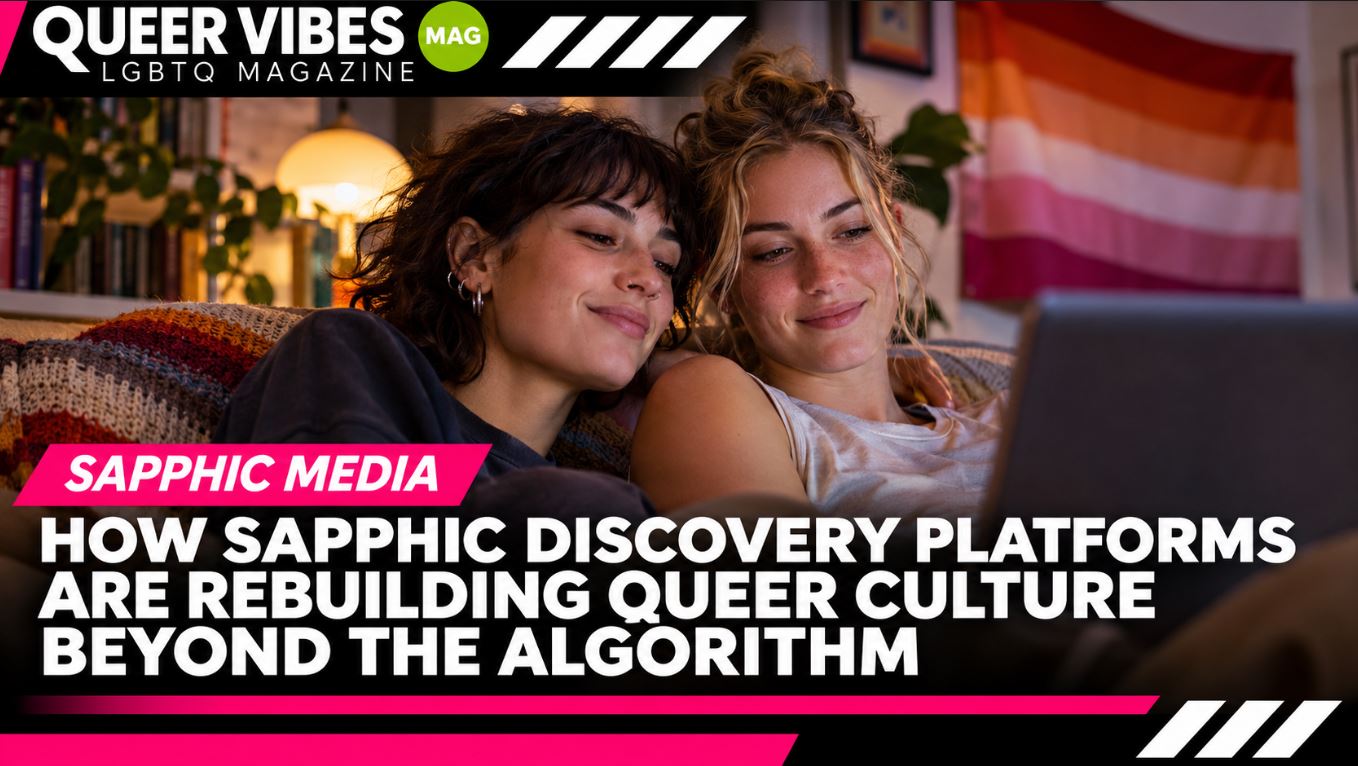
For years, finding lesbian, bisexual, pansexual and queer women’s stories online has meant working around systems that were never designed for them. Search results blur together, streaming services bury smaller titles, and recommendation engines reward scale and recent engagement rather than community context.
A new generation of specialist platforms is trying a different route: not merely hosting videos, but building places where audiences can discover queer culture on terms that are easier to understand and less dependent on a single platform’s algorithm.
OMLHQ moves beyond a single video platform
On November 10, 2026, lesbian media brand OML launched OMLHQ, a standalone destination for sapphic films, shows, books and cultural recommendations. The company says the project extends its long-running video work into a site designed around discovery: viewers can browse titles by format, genre, mood and where they are available.
That distinction matters. A catalogue can be useful; a catalogue that tells people whether a work can be watched for free, streamed with a subscription, rented or bought in a particular country addresses a real problem for queer audiences. A title may be widely discussed online while remaining inaccessible where a reader lives.
OML’s launch announcement describes the project as a move away from relying entirely on third-party algorithms. That is a company claim, rather than an independent measure of the platform’s impact. But the live site already illustrates why the model deserves attention: its listings separate viewing options and territories instead of treating “available to stream” as a universal fact.
Discovery is not neutral
Generic entertainment platforms increasingly include LGBTQ+ tags, but those labels can flatten important differences. A viewer looking for a trans lesbian character, a Black sapphic filmmaker, a short film, or a story outside the United States may not get meaningful results from a broad category page.
Specialist discovery can make those distinctions visible. It can also preserve cultural memory: older independent films and web series often disappear from recommendation systems as soon as their initial promotional cycle ends. Curated shelves, editorial notes and accurate availability checks can give those works a longer life.
There are limits. A specialist site still needs to keep regional availability current, explain when a listing is supplied by a distributor, and avoid presenting commercial links as neutral recommendations. Readers should also remember that the presence of a title in a directory is not a critical endorsement.
Why this matters for sapphic audiences
Sapphic viewers have long navigated a fragmented landscape: festival films with short release windows, international dramas with uneven subtitles, series whose queer characters are peripheral, and titles that are marketed differently from one country to another. A discovery-first model can reduce that friction without claiming to replace criticism or local queer media.
It may also create more room for work that does not fit the dominant commercial template. OMLHQ says it welcomes lesbian, bisexual and pansexual audiences as well as trans lesbians and nonbinary people who connect with sapphic stories. The test will be whether that inclusive framing is reflected in the range of creators, countries and genres surfaced over time.
A wider shift toward community-owned routes
OMLHQ is part of a wider media shift: queer organisations are trying to build direct relationships with audiences through newsletters, searchable archives, events and independently controlled websites. The goal is not to abandon major platforms completely. It is to avoid allowing a change in an algorithm, moderation policy or licensing deal to decide whether a community can find its own stories.
For readers, the practical takeaway is simple: treat specialist platforms as discovery tools, then check the availability information for your location and seek out reviews or reporting that provide context. For creators, these spaces may offer an additional route to an audience that is actively looking for queer work rather than stumbling across it by chance.
Sources and reporting notes
Reporting for this article is based on OML’s November 10 launch announcement and on a review of the public OMLHQ catalogue. Claims about OMLHQ’s audience, strategy and future plans are attributed to OML. Streaming availability can change and should be checked locally before viewing.

 English
 Español
Leave a Reply