


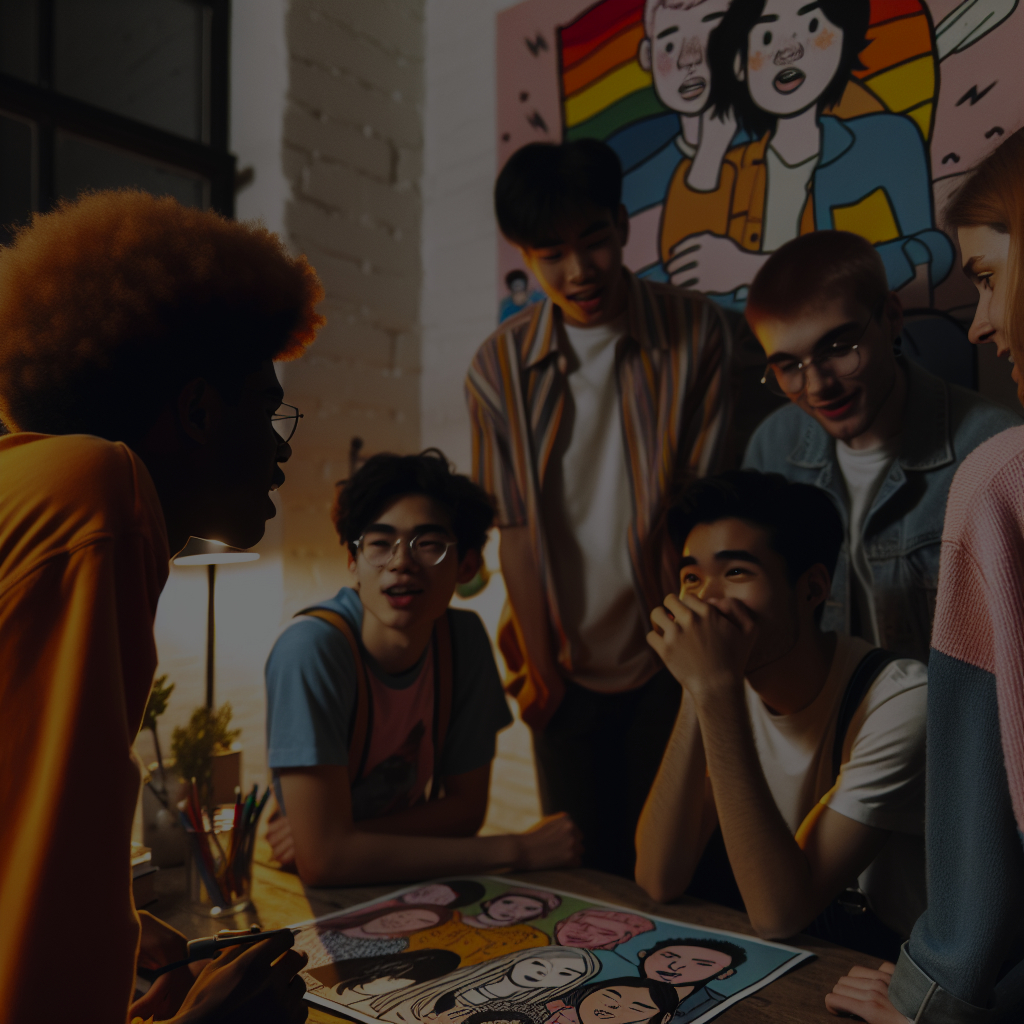
Queer Graphic Novels for Teens and LGBTQ+ Stories for Young Readers
Overview
Queer comics aimed at teens have emerged as a crucial platform for expressing the richness of gender identities, sexual orientations, and personal journeys. Crafted for younger audiences, these works delicately address themes such as coming out, gender identity, queer romance, chosen family, self-acceptance, and societal perception.
Through expressive artwork, visual storytelling, and heartfelt emotion, queer comics offer a unique way to portray intimacy and authenticity. They shed light on experiences that have long been overlooked and provide teens with stories they can genuinely relate to. This guide highlights essential queer graphic novels every teen should know, and expands the conversation to include other impactful visual narratives that enrich LGBTQ+ youth culture.
Graphic Innovation Serving Queer Teen Narratives
Color Palettes, Black & White Tones, and Visual Metaphors
Visual expression lies at the core of many queer comics. Heartstopper, for example, uses soft pastel hues to create a gentle ambiance, with each color mirroring the emotional growth of its characters. Meanwhile, Tillie Walden’s Spinning leverages black-and-white illustration to subtly depict isolation, internal conflict, and the complexity of self-discovery linked to gender and sexuality.
Rich visual metaphors—like fading speech bubbles symbolizing silence or translucent figures representing a lack of belonging—help convey unspoken pain and inner turmoil. Despite the simplicity of their illustrations, these books resonate deeply, immersing readers in powerful, universally shared emotions.
Turning Aesthetics into Emotional Storytelling
Each title’s unique artistic style brings its emotional core to life. In Écumes, soft lines and a pared-back color scheme accompany an exploration of loss and vulnerability. The manga Blue Flag employs airy compositions and strategic use of white space to highlight loneliness and missed connections—central LGBTQ+ themes.
Visual aesthetics aren’t just decorative—they’re essential to the narrative. Facial expressions, gaze intensity, and unconventional panel layouts transcend text and amplify everything left unsaid. For teen readers still finding the words to describe their own realities, this innovative storytelling becomes a mirror of their lived experience.
Top Picks: 5 Must-Read Queer Graphic Novels for Teens
Powerful, Thoughtful, and Accessible Stories
These standout graphic novels speak directly to teenagers without oversimplifying their experiences. Rejecting stereotypes, they approach emotions with authenticity and spotlight diverse characters and situations, offering inclusive stories without sacrificing depth.
1. Écumes
By Ingrid Chabbert & Carole Maurel – France
Graphic Novel

Écumes follows a teen and a child navigating grief and healing in a queer family context. It explores themes of same-sex parenting, personal loss, and reconnecting through chosen love.
Carole Maurel’s delicate, clean drawings complement the emotional sensitivity of the text, making this story beautifully accessible for teen readers. It’s a moving look at how queer graphic novels can address heavy topics with warmth and care.
2. Call Me Nathan
By Catherine Castro & Quentin Zuttion – France
Graphic Novel

This graphic novel centers on Nathan, a trans teen facing misunderstanding from his family, classroom stigma, and systemic challenges. It offers an empathetic look into the emotional highs and lows of transitioning.
Quentin Zuttion’s dynamic illustrations heighten the narrative’s emotional impact, making Call Me Nathan a go-to resource in schools and libraries for introducing the realities of trans youth with both sensitivity and insight.
3. Blue Is the Warmest Color
By Julie Maroh – France
Graphic Novel

A landmark in queer francophone comics, Blue Is the Warmest Color portrays the journey of discovering same-sex love. Told through Clémentine’s diary, it captures the powerful intensity and emotional upheaval of adolescence.
The book’s signature art—mixing black and white drawings with strategic blue hues—enhances its emotional resonance. Though also embraced by adults, it remains a foundational read for teens exploring LGBTQ+ themes in an honest and raw way.
4. The Princess and the Fisherman
By Sébastien Perez & Justine Brax – France
Teen / Youth Graphic Novel

A poetic fable that subverts traditional gender roles and romantic tropes, The Princess and the Fisherman addresses gender fluidity, self-acceptance, and freedom of expression through an accessible and visual storytelling style.
Its dreamy, vibrant illustration style makes this a perfect introduction to the world of inclusive comics, especially for middle schoolers just beginning to explore identity issues.
5. The Witch Boy
By Molly Knox Ostertag – United States
Teen / Youth Graphic Novel

The Witch Boy tells the story of Aster, a boy born into a magical world where only girls can practice witchcraft, while boys become warriors. Aster rejects this binary structure, seeking agency over his own identity.
Set in an accessible fantasy environment, the story subtly explores themes of trans identity, gender nonconformity, and inherited expectations. Magic becomes a metaphor for self-discovery, making this powerful coming-of-age narrative ideal for young queer readers.
Why Queer Graphic Novels Are Essential for Teens
Dynamic, Relatable Characters
What sets queer comics apart is the multidimensional nature of their characters. These teens are never reduced to a singular identity—they question, grow, make mistakes, and experience joy. This complexity allows young readers to see themselves represented in full, without being defined by their labels.
These stories often highlight chosen families, solidarity, and community support, offering refreshing alternatives to the rigid nuclear family model that dominates mainstream youth literature.
Social and Cultural Impact
Queer comics play a pivotal role in changing societal perceptions. They support:
- greater visibility of LGBTQ+ teens
- validation and reduced isolation for marginalized youth
- greater openness and dialogue between teens, parents, and educators
- education around respect, identity, and diversity
As such, they are more than entertainment—they’re educational, cultural, and social tools.
BONUS – Other Queer Visual Formats Teens Love
(Beyond traditional comics)
While graphic novels are at the center of this movement, other formats offer equally rich contributions to queer storytelling among teens. Though they fall outside the classic Franco-Belgian tradition, their cultural influence is undeniable.
Graphic Memoirs & Novels
Heartstopper – Alice Oseman (UK)
A heartfelt depiction of a same-sex teen romance, now a global sensation thanks to its TV adaptation.
Spinning – Tillie Walden (USA)
A moving autobiographical narrative exploring sexuality, gender identity, and the weight of expectations in competitive sports.
Manga
Blue Flag – KAITO (Japan)
A reflective manga on ambiguous feelings, friendship, and self-exploration during adolescence.
Webtoons
I Love Yoo –

 Español
  English
Deja una respuesta