


Updated 31 October 2026 — Prosecutors in Buenos Aires have requested a life sentence for Justo Fernando Barrientos over the attack that killed three lesbian women and left a fourth seriously injured in Barracas in May 2024. The request was made during closing arguments on 28 October; it is not a verdict.
What prosecutors asked the court to decide
According to the Argentine public prosecutor’s office, Juan Manuel Fernández Buzzi asked the Buenos Aires court to convict Barrientos of aggravated homicide in three deaths and attempted homicide in the survivor’s case. The prosecution sought aggravating factors including gender-based violence and hatred based on sexual orientation.
“El motivo del crimen fue el odio,” the prosecutor’s office states in the heading of its account: the motive for the crime was hatred. That is the prosecution’s position, which the court must assess alongside the defence and the evidence.
The next stage is the defence argument
The prosecutor’s office says the trial will continue on 11 November with the defence’s closing argument. A request for a life sentence does not mean that the court has imposed one. Nor should the allegations about motive be presented as a completed judicial finding.
The closing arguments have also been covered by local LGBTQ outlet Agencia Presentes on 29 October. The immediate development is in the courtroom; the attack itself occurred more than two years earlier.
For readers following the case, that chronology matters. The original report below describes the aftermath in May 2024. This update records the later prosecution request without treating the two moments as a new attack or suggesting that proceedings have already concluded.
The question of how institutions recognise and respond to anti-LGBTIQ violence also informs Outright’s new report on documented targeted killings, a separate international study whose case count is explicitly non-exhaustive.
Original report — 16 May 2024
Lesbian Woman Burned in Argentina : ‘They were killed because they were lesbians’
“They were burned because they were lesbians”: Argentina is in shock after a brutal attack on two couples of women in Buenos Aires. The tragedy occurred when a Molotov cocktail was thrown into their apartment during the night, resulting in the death of three women and leaving a fourth gravely injured. The victims, two aged 52 and another 43, succumbed to their injuries. The survivor, aged 49, was able to provide crucial information to investigators from her hospital bed.
Witnesses Accuse Hostile Neighbor
Testimonies, including those of other residents of the building, pointed to a neighbor who regularly insulted the two couples, calling them “monsters,” “filthy pigs,” and “tortas.” This sixty-year-old man was arrested and taken into custody. Following the announcement of the third death, hundreds of people gathered to express their outrage in the Barracas neighborhood, highlighting a housing crisis and a climate of hateful discourse.
Precarious Housing and a Story of Survival
The fire occurred in a building called “conventillo,” known for being affordable housing frequented by waves of migrants. The victims, Pamela, Mercedes, Andrea, and Sofía, lived by street vending and occupied a modest apartment on the second floor of the building. Andrea Amarante, one of the victims, had already survived the República Cromañón nightclub fire in 2004, another tragic event in Buenos Aires.
Demands for Safe Housing and Official Reactions
A statement from the victims’ collective emphasized that Andrea had never received compensation or psychological support after the Cromañón tragedy. Local authorities have not commented on the lesbophobic nature of the attack, while LGBTI+ groups were the first to denounce this hate crime. The Ministry of Women’s Rights criticized the government for its handling of hate speech.
A Controversial Government and Questioned Laws
President Javier Milei, recently in power, has taken a controversial stance by eliminating the Ministry of Women’s Rights and opposing inclusive language. His liberal positions do not extend to abortion, which he seeks to restrict contrary to current law.
A Spontaneous Memorial and the Vulnerability of the Victims
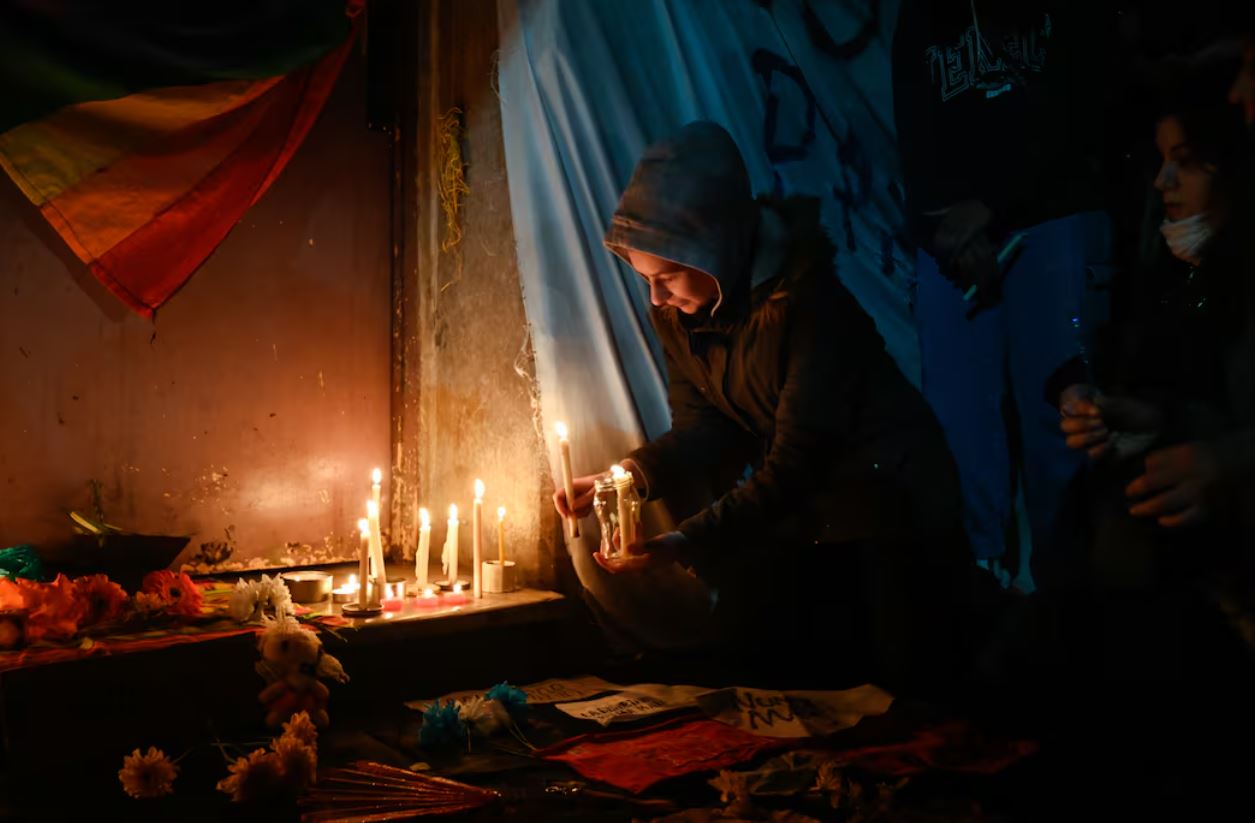
At the end of this dark day, candles were lit on an improvised altar in the neighborhood, where a speaker highlighted the double vulnerability of the victims, attacked both because of their sexual orientation and their precarious economic situation.




 English
 Español
Leave a Reply